
In this edition |
|
Community engagement
Activity group updates |
|
|
|

|
Hell’s Gates to Alexandria Bay – photo credit: Tony Wellington |
|
|
|
|
|
Since 2009, under an agreement with Queensland Parks & Wildlife Service (QPWS), Noosa Parks Association (NPA) has been operating the Visitor Information Centre at the entrance to the headland section of Noosa National Park (at the end of Park Rd). I am pleased to say that we have recently negotiated a new agreement with QPWS to continue managing the info hut for the next five years. Our volunteers generously give their time to staff the information hut every day of the year. NPA is deeply indebted to those members. As is well understood, volunteering strongly boosts personal and community wellbeing. A regular shift at the national park can do wonders for one’s mental health! If you are interested in joining this happy throng, please contact our project officer Dave Vickery on: nnp@noosaparks.org.au. All funds raised at the visitor centre go directly towards the purchase of environmentally sensitive land that can be added to Noosa’s conservation estate. Some of the funds raised at the info hut went towards the Yurol-Ringtail Koala Corridor Project pioneered by NPA. This groundbreaking project saw NPA team with Noosa Council and the Queensland Government to add 2,400 hectares of land to Tewantin National Park. To facilitate this, NPA shared the costs of the buy-out of HQ Plantation’s long term harvest rights. Those areas, around 1,500 hectares, are now gazetted as national park and the revegetation is proceeding nicely. But an additional benefit arose at the conclusion of the Yurol-Ringtail Project. The funds that NPA and Noosa Council contributed were held in an interest-bearing account with Queensland Treasury Corporation. These funds have earned $300,000 of accrued interest. Under an agreement, that interest will now be directed towards koala conservation projects within the Noosa region, with the projects to be approved by the state, council and NPA. We are currently in discussions with Noosa Council about how best to allocate those funds. On a very different matter, NPA recently participated in the consultation leading to council’s development of a draft Burgess Creek Integrated Catchment Management Plan. The draft plan is available for viewing on council’s YourSay website at: https://yoursay.noosa.qld.gov. Best wishes Tony Wellington |
|
|
|
|
|
For many years, we’ve been incredibly fortunate to have Joseph Barrowcliffe managing our website with dedication and care. We’re very grateful for everything Joseph has done, and as he steps back from the role, we’re now looking for someone to take over as our volunteer Website Manager. If you have some IT skills, a basic understanding of WordPress, and would enjoy supporting our organisation, we’d love to hear from you. Please email office@noosaparks.org.au or have a chat with one of our Committee members. The role is primarily focused on website content editing. Our website uses WordPress, a widely used content management system designed for non-technical users, so you don’t need to be a web developer. Typical tasks include: Updating the Friday Environment Forum content each fortnight. Uploading program attachments and links once or twice a year. Creating and uploading PDF versions of documents. Keeping website content current and well organised. There are also a few simple website administration tasks, such as checking that automatic security updates and backups are running smoothly to keep the site secure and healthy. This is a rewarding volunteer opportunity that helps keep our community informed and connected. If you’re comfortable using WordPress and would like to contribute your skills to NPA, we’d be delighted to hear from you. |
|
|
|
|
|
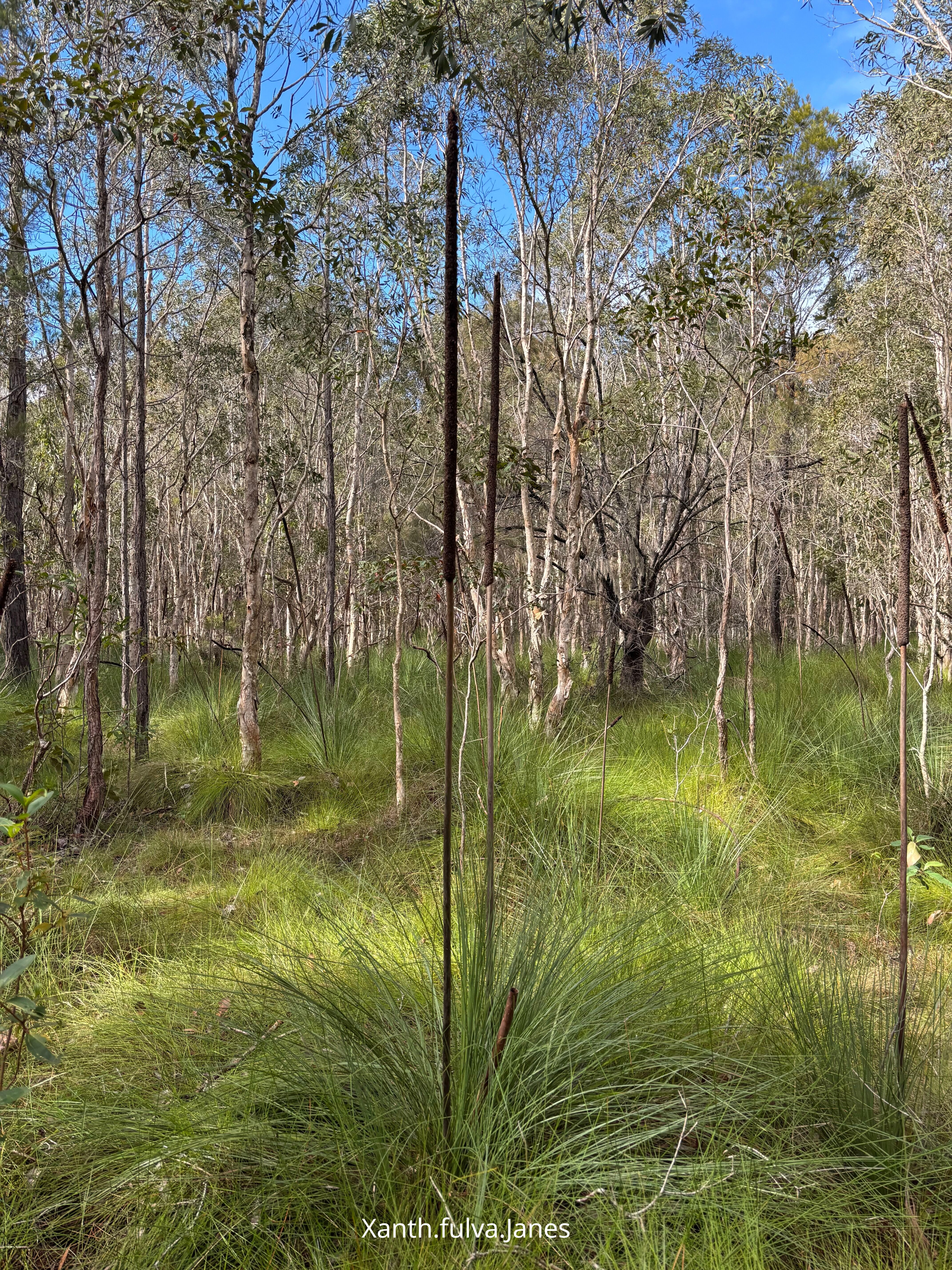
I would like to begin this newsletter with a tribute to David Warwick, who passed away just a few days after presenting at our July meeting more of his plant specimens from the bush he has so lovingly planted and tended on his property. We have known David for some or nearly all of the 14 years from when he first joined the Botany Group. He had a gentle and caring nature and was well liked and respected within the Group. He contributed greatly to the group, with his extensive plant knowledge, presentations, and plant specimens. We have also enjoyed and learned from several invitations to view his property on Black Mountain, where David had constructed pathways and added an amazing collection of native plants throughout the existing forest. We shall miss his friendship and presence at our meetings and outings. Due to over 50 mm of rain in the previous week, it was necessary to find an alternative to our May walk at the London Creek Environment Reserve. A close alternative, with the added bonus of concrete paths, was Cranks Creek Park in Tewantin. Linda Falkner had sent out a plant species list covering the general area and to that we were able to add several species. One of note was brown bloodwood (Corymbia trachyphloia) whose characteristic bark was spotted by John Birbeck. The identification was confirmed when the tree’s unusually small (for a bloodwood) gumnuts were found. In the understory, the molucca raspberry (Rubus moluccanus) was fruiting. It is one of the tastier of the seven native raspberries. At another well-attended meeting on 10th June, we continued to get a selection of both more common species such as Gahnia aspera (large-fruited sawsedge). Then there were several less common species to enhance our botanical knowledge, such as Argyrodendron sp. Kin Kin (rusty tulip oak) with it distinctive pale reddish leaf underside and Mackinlaya macrosciadea (blue umbrella bush) with its terminal whorls of flowers and blue fruit. Jane Armes gave a very informative talk regarding her Cooroibah Volunteer Conservation Area (VCA). Jane, with her husband Deon, had acquired a large residential property at Cooroibah some years ago. Then, when the adjacent property, which had been cleared in the 1970s with the intention to graze cattle (it was never actually grazed) was put up for sale for subsequent subdivision, Jane and Deon decided to buy it and conserve its natural state by establishing 32 of the 34.4ha property as a VCA through Noosa Council. Jane explained how she had explored the various mapping and reference tools, to learn the history of the acquired site and the three main vegetation types that were included in the site viz, Scribbly gum on weathered sandstone; Tall open forest of Blackbutt; and Melaleuca quinquenervia open forest on coastal alluvium. She also introduced us to several of the plant and fungal residents in their VCA including how Mycoheterotrophic plants obtain nutrients through parasitizing mycorrhizal fungi. These include some species of the forb genus Burmannia of which Burmannia disticha is present on Jane’s property. On our subsequent Botany Walk on 28 June a good number of us were able to observe the great mix of biodiversity that has been preserved in the VCA. Given the size of the VCA and the slow rate at which we progress, we only saw a fraction of the 32 ha VCA but this was enough to demonstrate the rich diversity of vegetation. Canopy species include Eucalyptus tindaliae (Queensland white stringy bark) with its rough bark, Angophora leiocarpa (smooth apple) and Syncarpia glomulifera (turpentine). Allocasuarina torulosa (forest oak) with its dark, furrowed bark, and Melaleuca quinquenervia form lower canopy homogeneous communities. Acacia hubbardiana (prickly moses) provided a flowery understory, together with a host of other shrubs and forbs including Hakea benthamii (vein-leaved hakea), Goodenia rotundifolia (round-leaf goodenia), Goodenia bellidifolia (daisy goodenia) Sphaerolobium vimineum (leafless globe pea), Xanthorrhoea fulva (wallum grasstree) and a number of large tongue ground orchids (Cryptostylis subulata), which Jane was very keen to show us. At the end of the walk Jane and Deon provided a scrumptious morning tea/coffee. Thank you both for that and for sharing the beauty of your two properties. We had a very full programme for our July meeting. There were a number of interesting specimens presented, several of which were uncommon, thus adding to our collective plant knowledge. These included Stenocarpus salignus (scrub beefwood) with its bright green leaves, Lepironia articulata (grey rush) with its tall, thin leafless stems, and Eucalyptus resinifera (red mahogany). Joan Heavey gave a short explanation on the various species of Gahnia, so we are now less confused by the various sawsedges we see in the wild. Using cuttings, Joan, explained the distinctive features of Gahnia aspera (large-fruited sawsedge), G. clarkii (swamp sawsedge), G. sieberiana (red-fruited sawsedge), and G. melanocarpa (black-fruit sawsedge). Robert Price then gave a very enlightening talk on Dry Rainforests (which is not an oxymoron). Robert pointed out the location of several remnant patches of these forests in south-east Queensland. They occur where rainfall is usually between 600 and 1,000mm, having closed canopies of fire sensitive species. Fluted and banded trees are more common and there isn’t much understory vegetation but plenty of vines. There were a number of excellent slides showing several of the species present in each location. These included Alstonia constricta (bitter bark), Denhamia disperma (orange boxwood), Flindersia collina (leopard ash) as well as F. australis and F. bennettii. Rhodamnia dumicola (rib-fruited malletwood) could also be found. This species may only be 20cm dbh but be 2,000 years old. My thanks to Joan Heavey and Robert Price for their contributions. Paul Ryan Botany Group |
|
|
|

|
|
|
Bird Observers’ Group |
|
|
|
Two planned 2026 activities for this group have finally been achieved. The outing to a Tinbeerwah property, washed out last year, has been successful this time. The owners of this 85 acre property have mass planted trees especially for birds and koalas. It was a privilege to be able to visit this time recording 40 bird species.
Secondly we have been trying to arrange with Jo Brown to speak at Friday Forum about ‘Birds and Wildlife of Noosa North Shore’, where she now lives. She spoke to an enthusiastic audience in a packed room on 24th July. She recounted some of the hurdles faced by wildlife and how she and her teams are caring for, not only birds, but turtles, snakes frogs echidna etc. Plastic rubbish, balloons and excess traffic on the beach is a major issue.
Adrian Gallagher was the 10 minute speaker prior to Jo’s presentation. He spoke about the current threat to our birds-as well as other wildlife – the highly pathogenic Avian influenza H5 bird flu (H5N1 clade 2.3.4.4b) has been detected in wild birds in Australia. This is the same strain that has caused mass mortality in poultry, wild birds and sea mammals in other countries. The first case in Qld., a Petrel, was found on Moreton Island only one hour prior to Adrian’s talk. If you notice sick or dead birds or other animals: The next Bird Observer’s guest speaker on the 14th August will be renowned ornithologist Dr Richard Noske who will be talking about ‘Blue-faced Honeyeaters’. His obsession with this species began 2 years ago when he discovered a group of six “Blueys” nesting only 100 meters from his home. There is never a dull moment for bird observers!! Angela has enjoyed photographing Puffins on the other side of the world and is now in Greenland where she was surprised to learn there are 230 species of birds. I’m at home, so I have stepped in to prepare this report for you. Valda.
Angela Farnsworth Noosa Parks Association Bird Observers’ Group |
|

|
|
Friday Environment Forum |
|
|
|
The Friday Environment Forum (FEF) hosted four forums in June and July: * On 12 June, Kieren Aland from Wildwise Environmental Services presented us with the latest detailed research on how the Eastern Ground Parrot is faring in South-East Queensland and what needs to happen to preserve its habitat. Upcoming FEFs:
We look forward to seeing you at NPA’s Environment Centre for these talks and others, every 2nd and 4th Friday of the month from 10.30am till 12pm. Entry is $5 Tap and Go with tea and coffee provided from 10am. Admittance is FREE for current members of Noosa Parks Association. Best regards Rebecca Burnett-Smith |
|

|
|
|
|
|
In June and July along the Coastal Walk there was the usual corky passion, asparagus fern, molasses grass, blue tops and ochna to be collected and binned. Fortunately the ground is still moist and the weeds are easy to pull. Winter weeding in the Noosa National Park has had a mixed turn out of helpers. While June was well attended, our last session had the lowest number of weeders in years (only three of us!). Hoping more can join us, as the weeds are never on a break! Please email Amanda at curry.clarke@gmail.com. |
|
|
|
|
|
Kangamoo’s Big Book Drop, created by Noosa-based author and illustrator Dan Munday is a campaign to give away 700 locally created children’s books to childcare centres, kindergartens, primary schools and eligible children’s and family support services across Noosa, Gympie and the Sunshine Coast. 📚💛 The fun, rhyming mystery stories encourage children to reuse, repurpose and reimagine old toys and broken things, showing them that something old can lead to an exciting new adventure. If you know somewhere that would love a set? Nominations can be made at www.frankenrhyme.com.au/ Nominate a school, kindy or children’s service: https://frankenrhyme.com.au/ Follow Frankenrhyme on Instagram: https://www.instagram.com/ Visit the Frankenrhyme website: https://frankenrhyme.com.au/ Help get these locally created books into the hands of local children! |
|

|
|
|
|
|
Most of us want to recycle, but it can sometimes be hard to know exactly how. Do jar lids and bottle caps go in the yellow bin? What kinds of plastic can be recycled? And given that food residue can mess up the machines used to recycle waste, how clean do things need to be before they get recycled? Much depends on where you live. The first thing to know is what’s accepted in your yellow-lidded kerbside bin depends on where you live and what your local material recovery facility can actually recycle. Check Noosa Council’s website at https://www.noosa.qld.gov.au/ Online search tools such as Recycling Near You and the Australasian Recycling Label’s “check locally” feature let you enter your postcode and look up how to dispose of specific items. When in doubt, check for Australasian Recycling Labels on packaging before you bin it. A “chasing arrows” symbol indicates the item is accepted in more than 80% of kerbside recycling bins. However, not all packaging has these labels. Some carry multiple labels. |
|

|
Curated and edited by: Darlene Gower Honorary Secretary |